

Two Closings and What They Tell Us About This Market
This fall Trellis Equity closed two multifamily acquisitions in San Diego County totaling 110 units and $24.1 million of consideration, and while every closing is worth celebrating with the brokers, lenders and investors who helped us get there, these two deals deserve a longer explanation than a LinkedIn post allows because together they capture almost everything we believe about where Southern California multifamily is heading over the next several years.
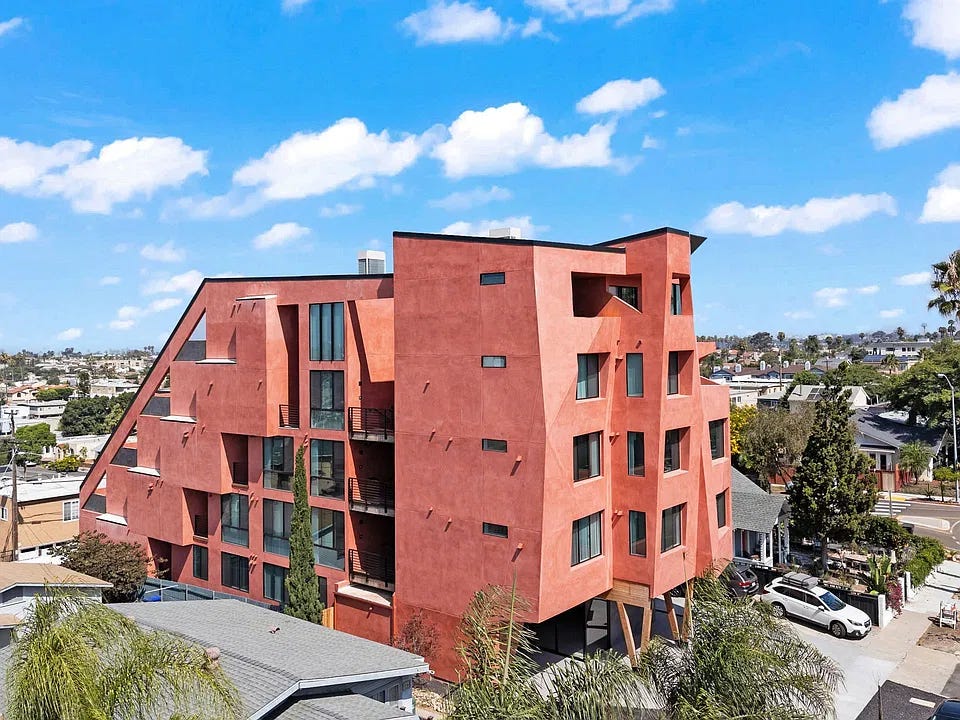
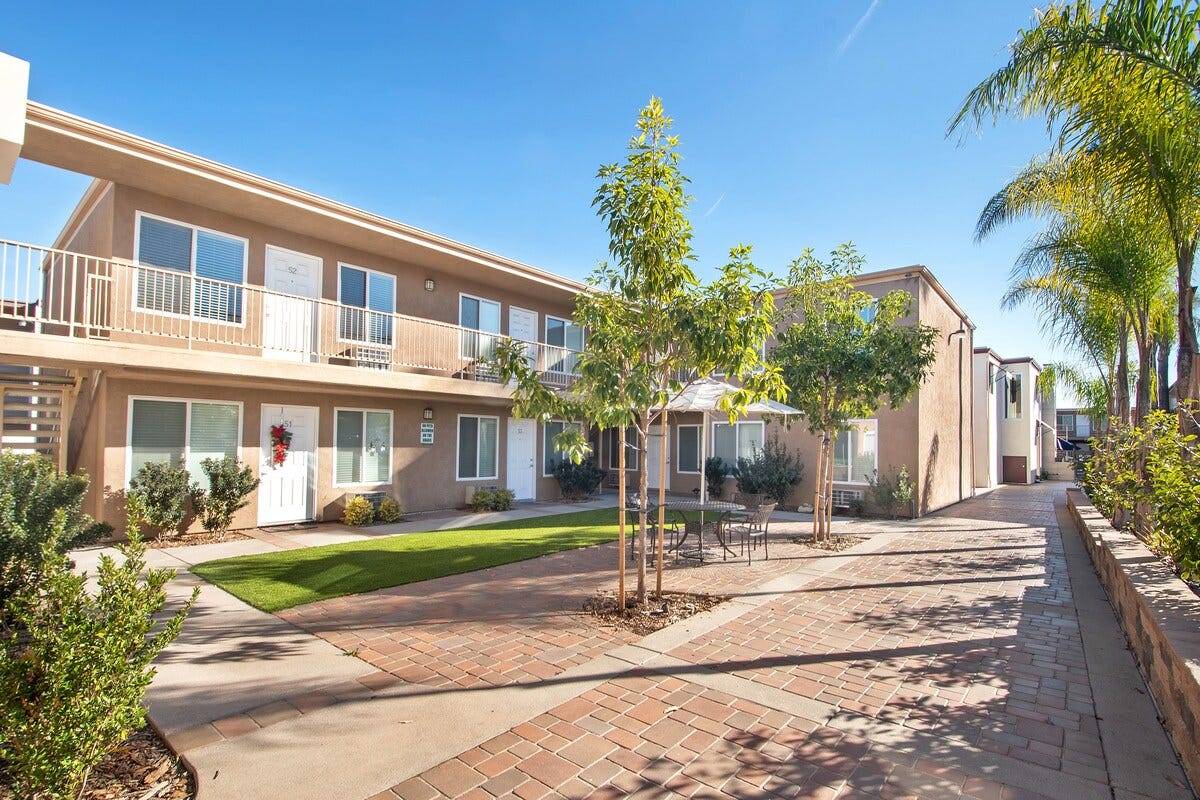
The first, Nok Nok Apartments, is a 29-unit building delivered in 2024 that we acquired out of a court-appointed receivership at a meaningful discount to what the original developer spent to build it, and it was 96% occupied with positive leverage and cash flow from the first day we owned it. The second, Tierra Del Rey, is an 81-unit community built in 1976 and extensively renovated in 2018 and 2019 that came to us through a direct relationship with the owner that we cultivated over seven years, and it closed 98% occupied with significant positive leverage going in and a clear path to add ten new units under California’s SB 1211.
The deals came from us spending everyday looking for opportunities in SoCal, but both came from the same discipline. I want to use this piece to walk our investors, our broker partners and the institutions we are beginning to work alongside through how we think about this market, how we underwrite, how my partner Lance Frame and I built this platform, and why we are leaning harder into Southern California at a moment when a lot of capital is still waiting on the sidelines.
Our Thesis for 2027: A Supply Cliff Meeting a Wall of Maturities
The simplest way to describe the opportunity we see is that two forces which rarely line up are lining up at the same time in Southern California, because new apartment supply is falling sharply just as a large volume of loans written at peak valuations is coming due into a higher rate environment, and that combination tends to produce motivated sellers holding well-located buildings that will be worth more once the pipeline clears.
On supply, the data from the major research shops is consistent. Kidder Mathews reports that San Diego had 12,206 units under construction in the third quarter of 2026, down 17.3% from a year earlier, with deliveries running 11.6% behind last year’s pace, and Northmarq counts roughly 3,800 units permitted so far this year compared with more than 5,500 at the same point in 2025. Los Angeles shows the same pattern with its construction pipeline down 11% year over year according to Kidder Mathews, and JLL’s Katherine Zeller has said she expects Southern California to see a substantial cliff in deliveries in 2027 before the pipeline flattens out. Orange County is the one market in the region where deliveries are still climbing, which is a nuance we watch closely when we underwrite there.
The national picture makes the case for coastal California even stronger. CBRE has said that the U.S. supply wave is cresting and that multifamily is positioned for its strongest rent recovery since 2022, and its midyear outlook expects coastal, supply-constrained markets to lead rent growth over the next five years, while its third quarter figures show rents still falling across much of the Sun Belt, including declines of 3.7% in Austin and 4.8% in Denver. Kidder Mathews makes the same point in its midyear forecast, noting that a sharp decline in construction starts is reducing future supply pressure and that rents should trend upward, particularly in supply-constrained coastal markets. In San Diego vacancy sits around 5.0% and in Orange County around 3.9%, which are healthy numbers for markets that are about to stop adding meaningful new inventory.
On the capital side, the Mortgage Bankers Association estimates that $875 billion of commercial and multifamily mortgages mature in 2026 and another $652 billion in 2027, and that wall is arriving after the Federal Reserve raised its target range to 3.75% to 4.00% in September, with the 10-year Treasury trading in the high 4% range. The stress is showing up in the data, with multifamily CMBS delinquency reaching 8.09% in October according to Trepp, up from 7.12% a year earlier, and with distress in the bridge loan market that financed so many value-add purchases in 2021 and 2022 rising to 28.2% according to CRED iQ. Marcus & Millichap put it plainly when it noted that higher debt costs and upcoming loan maturities may bring apartments to market and create acquisition opportunities.
We believe the largest firms are signaling where they want to own for the next decade, and our job is to buy the smaller, relationship-driven deals in those same submarkets at a basis the institutions cannot easily reach.
The Two Rules We Do Not Break
A market like this rewards discipline far more than it rewards activity, and the way we protect our investors is by holding every acquisition to two rules that we will not bend regardless of how much we like a building or how much time we have invested in a relationship.
The first rule is that we need to buy at least 10% below the current market value of the asset in its submarket, which gives our investors a margin of safety on day one that does not depend on rent growth, cap rate compression or a perfect execution of the business plan. The second rule is that the deal must solve to a going-in yield at least 150 basis points above the prevailing market cap rate in that submarket, so that the return is created by the price we pay and the work we do, with no reliance on the next buyer paying a lower cap rate than we did.
Those two rules are why our pipeline is full of opportunities we pass on, and they are also why sellers, brokers and lenders increasingly call us first when they need a buyer who will actually close. In a market where many buyers retrade late in escrow or simply fail to perform, we have built our reputation on underwriting carefully before we sign, telling a seller the truth about our price, and then closing on the terms we agreed to, and that certainty of execution has become one of the most valuable things we can offer a motivated seller.
We also underwrite conservatively in the places where a lot of sponsors get hurt. We reassess property taxes at our purchase price and again at the exit, we model operating expenses at market levels even when the seller’s historical figures are lower, we set market rents from the leases a property is actually signing, and we look for positive leverage on day one, so that the debt is working for our investors from the very first month of ownership.
Two Ways We Create Value
Nok Nok Apartments is a good example of what we call a basis reset, which is our first strategy and the one we believe will define the next two to three years in Southern California. The building was delivered in 2024 by a developer who financed it at a time when construction costs and interest rates both looked very different, and when the capital stack no longer worked the property ended up in a court-appointed receivership. We were able to acquire a brand new 29-unit building at a meaningful discount to what it cost to construct, with no entitlement risk, no construction risk and no lease-up risk, since it was already 96% occupied when we closed. Our family office partner now own a newer vintage asset at a basis that a developer starting today could not match, with positive leverage and cash flow from the first month, and we believe there are many more buildings like it sitting inside maturing construction and bridge loans across the region.
Tierra Del Rey represents our second strategy, which is buying well-located, well-maintained older properties in strong submarkets and creating value through operations and added density. We sourced the 81-unit property directly from the owner after a relationship that took seven years to build, and it closed 98% occupied with significant positive leverage going in. Our capital plan adds ten new homes to the property under SB 1211, including two units created by converting underutilized space and eight newly constructed ADUs, which lets us grow net operating income by adding supply in a market that badly needs it while keeping the existing residents in place. We structured the equity with a blend of 1031 exchange capital and fresh investment, and the project shows how a long-term relationship, a creative capital structure and a California-specific value creation tool can come together in a single acquisition.
What ties the two deals together is that both were sourced through relationships before any broad marketing process began, both delivered positive leverage at closing, and both give our investors multiple ways to win without depending on the market to bail out the purchase price.
Building an Institutional Platform
As our deal flow and our investor base have grown, we have been deliberate about building the infrastructure behind the deals so that the quality of our reporting, controls and capital management keeps pace with the quality of our acquisitions. To that end, I am excited to share that Trellis Equity has hired a full-time Chief Financial Officer who previously served as CFO of an institutional development company and of a large real estate private equity firm, and who brings the kind of fund-level accounting, reporting and capital markets experience that our partners expect from a firm managing their capital.
The decision to bring on a full-time CFO is ultimately about giving the firm the capacity to scale responsibly, because with a dedicated CFO alongside our Controller and our acquisitions and asset management team, we can close more transactions without sacrificing diligence, provide our investors with institutional-grade reporting on every asset, and manage a growing number of joint venture and syndicated structures with the same rigor that larger platforms bring to their funds. We expect to continue adding talented people across the firm in 2027, and we are building Trellis to be the operating partner that family offices and institutions want to work with for the long term in Southern California multifamily.
How We Partner and How to Reach Us
We invest on a deal-by-deal basis, which allows each of our partners to evaluate every acquisition on its own merits and to decide exactly where their capital goes. Depending on the partner and the opportunity, we structure investments as joint ventures that give family offices meaningful control over their real estate, as limited partnership syndications for investors who prefer a more passive position, and as 1031 tenant-in-common structures for owners who are exchanging out of a property and want to roll their equity into a professionally managed multifamily asset. We are currently welcoming new investors into our active projects and into the acquisitions we expect to close in 2027, and you can review our principals’ track record at trellisequity.com.
To our broker partners, the most valuable thing you can send us is an opportunity where the seller needs a buyer who will perform, whether that is a receivership, a maturing loan, a family that wants a discreet off-market sale, or a property where a long-time owner simply wants certainty. We will give you a fast and honest answer, we will tell you our price before we tie up your seller’s time, and when we agree on terms we will close. Please send new acquisition opportunities to me directly at JL@TrellisEquity.com.
To the family offices, high-net-worth investors and institutions reading this, we believe we are in one of the most attractive buying environments for Southern California multifamily in a generation, and we would welcome the chance to show you how we are positioning our partners for it. Please direct investor inquiries to my partner Lance Frame at Lance@TrellisEquity.com.
We are actively buying, we are growing the team, and we are grateful to every broker, lender and investor who helped make these first two closings of the season possible.
- Jason J. Lee, Managing Partner, Trellis Equity
This article is for informational purposes only and is not an offer to sell or a solicitation of an offer to buy any security. Past performance is not indicative of future results.