

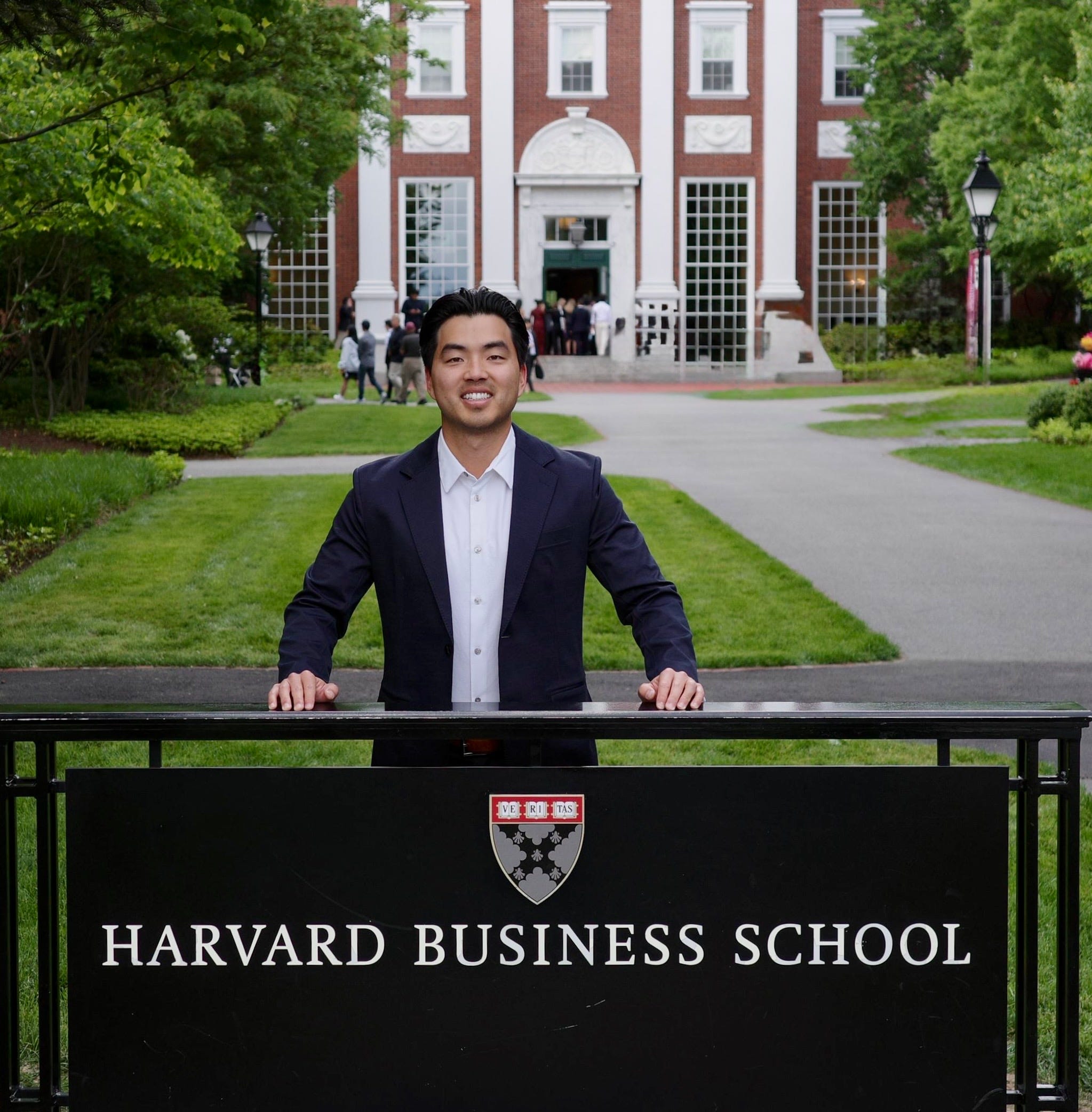
186 People, ~30 Americans, and 156 business owners from around the world.
I lived with seven other people on campus for 3 weeks. In our living group alone: France, United Arab Emirates, Spain, India, Mexico, and the US were the countries represented.
I was the smallest fish in almost every conversation I had with people from the cohort.
People with billion dollar businesses were at this program, and you would never know it. They were so humble and welcoming.
As I sit here in my office back in San Diego and I reflect on this life changing experience, the #1 learning from this experience was that no matter where you’re from, I don’t care if you live in Brazil or Japan, US or China, Russia or Ukraine, everyone has several things in common.
WAY more than you think.
We live in a world today where we are extremely quick to judge others. Especially people who on the surface seem very different from who we identify ourselves as.
Someone’s language they speak, what they wear, and what ideologies they believe in are just the tip of the iceberg.
In the end, everyone is a human being who is longing for deep connection, fun conversations, vulnerability, community, and memories they can cherish at their death bed.
I think people who run businesses are some of the loneliest people in the world who push most of their feelings and true emotions under the rug because they have no choice.
There’s so much external pressure and you have to always show your best face, even if you feel like hiding away that day and talking to nobody.
The genuine connections and vulnerable conversations with people so “different” than me is something I will cherish for the rest of my life. Lucky for me, I get to see these amazing people again in 2027 and 2028 for units 2 and 3.
The second biggest thing I learned from the program is the power of artificial intelligence.
I never understood the power of AI until some of the best professors and brightest business owners in the world showed me what is possible.
I became so inspired by others leveraging AI, that after the 3rd day at the program, I put up an ad on Indeed to hire an in-house AI software engineer and worked with a partner of mine to start building a product that would dramatically improve my business.
It’s been only 3 weeks since I started this process and the real world application to my investment company has been staggering.
I have AI agents underwriting complicated deals for me by ingesting broker OM’s and financial statements.
AI agents are acting as my CFO and compiling all of my expenses and financial statements in order to create a clean dashboard so that we can make quicker decisions at ease.
Agents are reading contracts from vendors, contacting other vendors to bid against that vendor, and negotiating on our behalf over email.
They are reaching out to brokers asking if they are working on anything new, project managing ongoing construction projects, and inputting expenses into the P&L automatically.
And.. the most important thing: When you have your own proprietary AI systems, you protect your company Data!
You should never be putting company documents or company information into Chat GPT or Claude.
If you manage your own properties or are the owner of a business, feel free to reply to this email. I think I could give you some great ideas to implement AI yourself and protect your data!
Lastly, AI isn’t going to replace your employees, but they will make your employees 10x more productive. Only fire employees who reject the implementation of AI in your business.
The third most important thing I learned from my 3 weeks at Harvard was the underrated power of feedback.
So many business owners and managers lack consistent feedback systems for their employees to buy into the company culture, understand the vision, and how things are supposed to be done at your company.
We hire someone, train them, and expect to be autonomous until something goes wrong. Then we give them negative feedback only and kill their confidence.
Confidence slowly dies, morale keeps getting worse, and eventually their production goes to crap. Then, you fire them wondering why there are so many incapable people out there.
This used to be me. My perspective has changed immensely on this subject after the program.
I am the problem, not the employee. People like me think that 1 on 1 meetings with employees is a waste of time when it’s the probably the highest ROI on my time that I can implement right now.
Constant positive feedback, while also giving constructive feedback daily is vital to successful growth in a company.
No matter what business you’re in, we are all in the people business.
When our people become happier and evolve, our businesses create more revenue.
Something I am making sure to implement immediately is a better schedule for giving consistent feedback as quickly as possible.
What does quickly as possible mean? Here’s an example:
When someone at your company does something the wrong way, don’t let it marinate over a few days in your head. We always do this as business owners.
When something is done wrong, tell them immediately, but start with something positive first.
“Hey John, you’re working really hard and I love that, but I just noticed that you just hung up on a potential customer a little too early. Here at our company, we always let the customer hang up the phone first, can you remember that next time? Keep up the good work!”
Feedback is the most powerful when done immediately. The longer you wait, the less effective it becomes.
There was an amazing case study that our professor presented where an old manager was doing a horrible job of giving feedback to a high performing producer who was causing problems with other employees at the firm.
Once the new manager took over, he moved his desk right next to the problematic employee and consistently gave him immediate feedback every time he did something wrong.
This was the most powerful lecture for me during the program.
For the sake of time, I will end this with a quick list of my 5 other top takeaways from the program.
If you want to chat more about business and/or the most effective use of AI, send me a note. See you again soon.
Five More Takeaways:
Strategy is not about what you do. It’s about what you choose NOT to do.
Marketing is simple. Make your customers feel like a hero to their customers, their friends, and their families.
When going up against the Fortune 500 giants in your industry, don’t go right at them and get squashed. Go around them. Go where they aren’t looking. There’s always room for penetration in a market.
Bad news in a crisis does not age well at your company. You need to be a lead communicator to your employees and your customers. Never let your people hear bad news from a different source. This can make or break your company in a time of crisis.
Collaboration and communication across departments in a company is mandatory. The quarterback needs to know who’s blocking for them and who’s running the route. Companies cannot operate in silos. A crisis is waiting to happen at your company if you work in silos.
Thanks for sharing all these insights, Jason!